Two years ago, in November, my husband and I visited London to celebrate our 50th wedding anniversary. We’d heard about London’s West End and booked theatre reservations for five of our six days. However, by midweek, we realized we were skimming the surface; there was more to London than theatre. Samuel Johnson had observed something similar some two centuries before our visit: “When a man is tired of London, he is tired of life.” Amen to that. So, we returned this year for two weeks.
Our previous location was in Notting Hill (Yes, it’s just like the movies), but it wasn’t near a central station. This year, we booked a flat in Kensington, closer to central London. Gloucester Station was a short walk, which meant we could reach most sites by tube or hoofing it in 30 minutes or less.
London is an extraordinary city. Its museums are the best I’ve encountered. They’re in century-old buildings that have been renovated and maintained. Their collections are superb, and courtesy of the British taxpayers, they’re free. It’s in the museums that one begins to understand obsessions. The collections of objects–paintings, sculptures, instruments, bugs, bones, ceramics, books, etc.–are beyond most people’s comprehension. But I get it. I have a predilection for photographing manhole covers, murals, ceramics, fabric art, and doorways. While my husband comments that, once again, I’m slowing our pace to snap a photo, I remind him that these items are stored in the cloud, not on walls, shelves, or drawers.
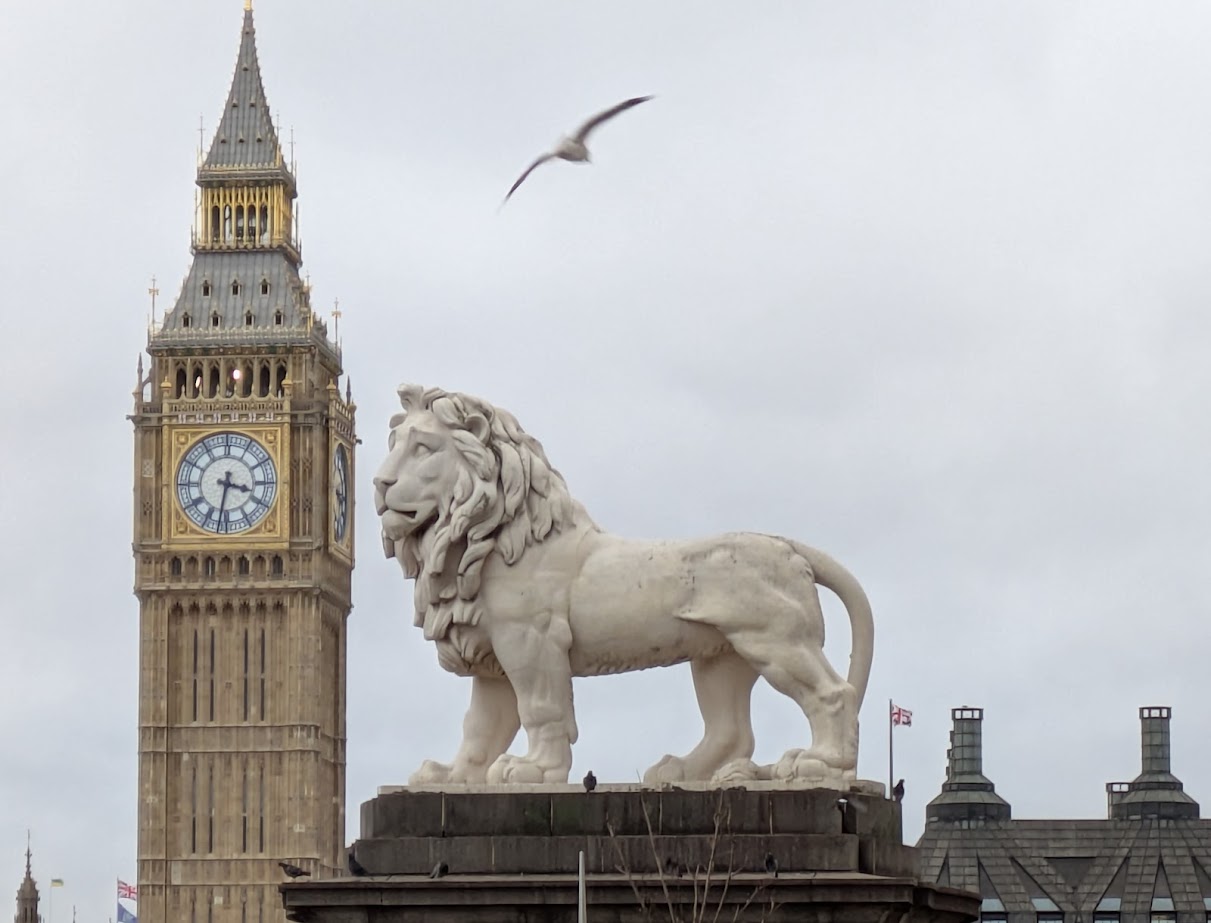
This trip, we visited the Science Museum and the Museum of Natural History. Twice. To say we were awestruck is an understatement. The intellectual contributions of individuals who were both curious and systematic created the powerhouse that was once England. We were similarly moved by the artists, but managed only one visit to each of the following: the British Museum, the Wallace Collection, the National Gallery, the Portrait Gallery, and the Victoria and Albert Museum. We came away with an appreciation of the arts (painting and ceramics) from the Medieval through to the Baroque periods. The conditions under which these pieces were created would not meet today’s work safety standards, yet the artists persevered, and we’re their beneficiaries.
Two years ago, we didn’t have time to travel beyond London. This year, we visited Bath (home to the Roman Baths and the site of several Bridgerton sets) and Oxford for walking tours of the towns. One of the remarkable features of the Oxford town tour was standing at a spot where we could take in a 360-degree view of buildings constructed in the 13th, 14th, 15th, 16th, and 17th centuries. We marvelled. The craftsmanship celebrated the confluence of architecture, mathematics and engineering. Each of these trips, which took a full day with connections, meant budgeting time elsewhere. Consequently, we bailed on Windsor Castle and Hampton Court.
My bias, of course, for London is the theatre. We managed to catch five performances: The Producers (madcap and fun), The Importance of Being Earnest (campy, fun, featuring Stephen Fry), The Assembled Parties (thoughtful), The Spy Who Came in from the Cold (riveting), and Stereophonic (immersive). If you plan to see theatre in London, book your tickets well in advance. I started booking about a week before we left, and the seat selections were limited.
And finally, we attended a Vivaldi candlelight concert at St. Martin in the Fields. It was an extraordinary fusion of music and architecture. Vivaldi wrote The Four Seasons in 1723; the architect, James Gibbs, began building the church in 1720 and completed it in 1725. That evening we were mesmerized as music soared and swirled throughout this elegant parish church. Some three centuries later, we were reaping the efforts of these visionary artists.
We are grateful for this trip. My parents didn’t make fifty years of marriage; Dad died twenty-four days short of their fiftieth anniversary. While Kenn and I have had the pleasure of celebrating fifty-two years, two months, and one week, I wouldn’t ask for another fifty. A few more, combined with good health, would have my cup spill over with blessings.
As for obsessions, my photos are scattered across my Google timeline and crowd my gigabyte limit. It’s time to behave like a Victorian collector and begin grouping them according to type and place. And then, I’ll post them on Instagram. Who knows what will happen? Perhaps someone, somewhere, in charge of replacing manhole covers will take the opportunity to create sidewalk art. I would love that.
Bonnie Lendrum is the author of Autumn’s Grace, the story of how one family manages the experience of palliative care with hope and humor despite sibling conflicts, generational pulls and career demands. Autumn’s Grace is a powerful commentary on the need for well-organized and well-funded palliative care in private homes and in residential hospices. It’s a gift to people who would like to be prepared as they help fulfill the final wishes of a family member or friend.
 Bonnie Lendrum
Hi Bonnie,
What a wonderful article. It was so nice to see you in London a few years ago. So glad you got to visit Oxford, too. It is a very special place. I lived and studied at Exeter College on Turl St, did you happen to walk there?
Hope all is well, Christine
Hello Christine, I’m so glad you enjoyed the piece. I’m sure we saw Exeter. We walked everywhere! The tour was awesome and we took a second one into the Bodleian Library. Did you know that Thomas Bodley was 001? He was granted a license to kill by Elizabeth I! That was just one of many fascinating pieces we learned on this trip. Thank you for reading.
Hi Bonnie,
This was a fun read! It is a while since I was in London, but my first trip was in 1959! You’re right about theatre. A classmate and I saw Alec Guinness in Ross, a play about Lawrence of America, and Richard Burton in Rhinoceros by Ionesco. Another trip we had standing room only for My Fair Lady wth Rex Harrison, Julie Andrews and Stanley Holloway! All memorable for a long time! There was a period in the 70’s when tourists would ask me for directions because I looked like a local! I know I would not recognize many areas now, but the classic museums and art galleries and St. Martin’s-in-the-Field have stayed the same. Your lively report brought back lots of wonderful memories!
With best wishes
Carly
Sent from my iPad
Hello Carly,
You saw icons on the stage. Wow. Theatre does generate splendid memories. As for looking like locals, Kenn came with his summer Tilley hat, which when worn anywhere outside of Canada says I’m a tourist. So, we bought him a wool brimmed cap. And yes, once we were asked for directions. Thank you for your memories!
All the best,
Bonnie
Hello Kenn and Bonnie. Congratulations
Frank, thank you for reading, and we gladly accept congratulations.
All the best,
Bonnie
Hi Bonnie,
What an adventure – we were poor students when we lived there for a year but thoroughly enjoyed the freebies available.
Some fun moments include working as a caterer in the Science Museum among the dinosaurs for high profile English companies and exploring the art galleries along the river.
We are thinking of making a visit to Europe in the next few years- ill definitely book the theater tickets early!
thanks for the inspiration
Dustin
Dustin, thank you for reading! And yes, book those tickets early.
XO
Bonnie