Blog

Thank you to the Canadian Medical Association and Macleans Magazine

Across the country, Canadians were given a forum to discuss end-of-life care,  thanks to the Canadian Medical Association (CMA) and Macleans. The Town Hall style meetings were an inspired idea. I attended the meeting in Mississauga and was pleased to see the combination of structure and informality in the program. Participants could come away with a common vocabulary, a sense of having been heard, an appreciation of other points of view, and direction for personal action. All of this in a two hour period.  Within a month of the last town hall, the CMA has released its report, End of Life Care: A National Dialogue. It is essential reading for all families.

Perhaps the best feature of these Town Hall meetings is that the hot-button issues of euthanasia and physician-assisted dying were set into the much larger context of end of life care. That context includes discussion of  end-of- life wishes, the preparation of advance care directives, the art of communication and the science of symptom management.

As someone who gave much thought to end of life care in the course of writing Autumn’s Grace, and who continues to worry about palliative care in rural Canada, I was delighted to see that the CMA’s conclusions included the following items:

  • A national palliative care strategy should be developed
  • All Canadians should have access to appropriate palliative care services.
  • Funding for palliative and hospice care services should be increased.
  • More education about palliative approaches and as well as how to initiate discussions about advance care planning is required for medical students, residents and practicing physicians. (The CMA was addressing its own discipline, but I would add to the list: nursing students, practicing nurses, pharmacy students and practicing pharmacists, etc.) 

Thank you to Dr. Louis Hugo Francescutti, the panelists and Macleans for initiating a national dialogue that I hope will result in changes to practice, policy and funding for palliative care…in my lifetime.


We Can Do Better

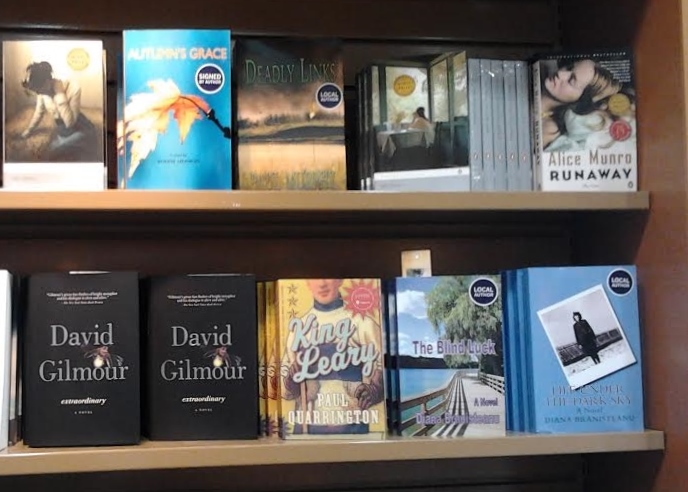
Chapters Display

“Forget about planning your funeral; begin planning your end of life!”  That was the first response to my question, “What was your ‘takeaway’ from reading Autumn’s Grace?” as a recent discussion with The Neighbours’ Book Club was winding down.

There were nods around the room. The speaker continued, “I have started talking with the people I love about how I want my last days to be, and I ask them what they would like for theirs.”  It was a reaction that I did not anticipate as I was writing Autumn’s Grace.  At most, I had hoped that readers would vicariously, through the eyes and ears of Max, Marge, Jessie, Jane and Ethan, feel more informed about the challenges of diagnosis, treatment and care-taking. Maclean’s cross country conversations on  End of Life Care: A National Dialogue  have, I suspect, accelerated the interest in considering the issues, and for these fora I am grateful.

If individuals, couples, families and communities prepared for end-of-life as well as we do for pregnancy, childbirth and infant/child-development we might enter our last stage of life’s journey with less fear and more informed support.

The second response to my query was, “We can do better.”  This speaker was not suggesting that people (family members, health care professionals) and organizations (hospitals, community health) were mal-intended. She thought that perhaps individuals and organizations did not stop to examine recurring negative patterns, and adjust accordingly. Without being prescriptive, Autumn’s Grace shines a light on some opportunities for improvement.

Both responses resonated with me. In 2013, the Faculty of Nursing at University of Toronto dared alumnae to dream of better endings.*  Dr. Sioban Nelson, then Dean, noted that “until we see death and dying as part of the continuum of care, Canada will remain a poor place to die.” I agree. We can do better. Simply put, that was my motivation for writing Autumn’s Grace.


* See: Dare to Dream Of Better EndingsPulse Spring/Summer 2013, Volume 6, Number 1. Pulse  is the magazine for Alumnae of The Bloomberg School of Nursing.


Remembering Alistair MacLeod


Alistair MacLeod & 2003 Creativing Writing Class

I met Alistair MacLeod during the cocktail reception for Humber College’s week long Creative Writing Workshop. The year was 2003. Alistair had corralled his seminar students to meet them and to establish the reading plan for the first two days

Up until that evening, I believed that I was in Alistair MacLeod’s group because he had been my first choice for a seminar leader. What I learned after talking to fellow students terrified me. He had been the first choice of more than half of the students I was meeting. They had arts degrees; I had two science degrees. Clearly there was a problem. Why would I be given my preference over others who had been writing creatively all their lives? Self-doubt crept in and settled in my gut.

So, it was with an uneasy feeling that I met Alistair MacLeod with my fellow seminar students.

“Which one of you is Lendrum?”

Oh no. This was it. My stomach lurched. “I am sir.”

“Good. We will start with your submission tomorrow.”

I was as close to fainting as I have ever been.  With absolute certainty I knew I had been placed in Alistair MacLeod’s seminar group to illustrate how not to write. I approached the next morning with trepidation.

Alistair chose to begin the class with a discussion about writing, and deferred our reading of each other’s material until the next day. Perhaps he had seen my look of terror.  If so, I was grateful. Alistair set the tone early on by saying, “Some of you have good beads but don’t yet have a necklace.”  Had I been less caught up in anxiety, I would have known that nothing bad was going to happen in this group. We would be safe to explore our own and each other’s creativity.

My fellow students were an accomplished group and eager to share their work. They were bright, generous, and inquisitive. I listened intently to how they asked questions, provided affirmations, and I scribbled furiously whenever Alistair spoke. Somehow I managed to manoeuvre my way down the presentation roster, which only delayed the inevitable. It was not until Wednesday afternoon, with my presentation behind me, that I began to relax—a little.

I have kept my notebook from that week, and they are full of Alistairisms.  The admonition that keeps me going on slow writing days is, “Write what you care about. Write about what worries you.” Or something like that. My handwritten notes from the first two days are tight and cramped. I had not yet unclenched. If I had been able to muster the confidence, I would have said to Alistair that the week had been special, memorable, and that his encouragement left me convinced that someday I would be a writer.

Bonnie Lendrum is the author of Autumn’s Grace, published by Inanna Press in 2013.

(Photo – Front row L-R: Mary Jo Morris, Helen Du Toit, Alistair MacLeod, Bonnie Lendrum.  Back row L-R: Rob Marsh, Ian Colford, Sally Moore  . James Bartleman, Michelle Butler- Hallett, Rod McDonald)

Children Grieve Too

“But I didn’t kill him!”

That was my seven year old’s anguished response when I had suggested he might say “I’m sorry,” to my brother-in-law whose father  had died a few days before. My son had not killed his cousins’ grandpa; a stroke had. However, his retort and his evident distress made me realize how little I knew about a child’s perception of death.

Playing with the Angels: Stories of Possibilities for Grieving Children is a book I would have welcomed at the time. It is written by Jane George, Executive Director of Wellwood in Hamilton. The artwork is engaging; the stories are affirming. It is a book I could have given to my ten year old to read independently, or snuggled up with both boys to read together. It’s the kind of book that  every family might want to have on hand…just in case.

Playing with the Angels: Stories of Possibilities for Grieving Children is available through Bryan Prince Bookseller and on-line at Indigo.

Rants and Rabbit Holes

Once again I find myself in the midst of writing a story about something that incites my passion. This time it is elder care. But before I know it’s happening, I have ranted my way down a rabbit hole, and find myself figuratively peering up, saying, “How do I get out of here?”

Writing about the topics that fuel my conscience is a challenge. At best I find myself ranting; at worst, I preach. Neither makes for satisfactory reading. I know it; my husband confirms it.

On Friday when I finished with the manuscript for the day I thought a major re-write was in order. The result was that on Monday, this week, I could not muster the courage to open the file. Yesterday, I tried a tack that I used in Autumn’s Grace—I gave all my characters permission to speak. They had observations that surprised me and they shared pieces of their history that I had not yet discovered. It was a happy 2,200 word day!

Perhaps my learning here is that controlling the narrative is analogous to digging a hole and then sitting at the bottom—alone. Giving my characters their voices, conversely, feels like being in a meadow—open,  full of colour, life and possibility. I prefer the latter, and that means learning how to let go.

Bonnie Lendrum is the author of Autumn’s Grace, a story about one family’s journey through palliative care.

A New Year, A New Manuscript, Much Gratitude, and a Quiet Revolution

Today is my first writing day of 2014. I am both excited and nervous. The morning has gone well. I still like the characters who I started creating last winter, and I am still enthused by the premise of The Memory Boxes. The four elderly women have been “sitting” at the edge of my vision, and “hovering” over my left ear since the summer. They continue to be observant and irreverent, and as a result I often find myself taking note of situations that would otherwise have escaped “my own” eyes and ears.  Over these winter months, I plan to be at my keyboard each day telling their stories. As I get closer to the finish, I hope to begin my next writing adventure, and that is to create and upload  a podcast for each chapter. With a little help from technologically enlightened sons and friends, the first podcast will be available in the autumn. There! I have said it; now I am accountable!

The writing/publishing experience has been amazing. I am grateful to every one of you who has helped along the way. It has been a journey worth sharing.

In the summer of  2011, after having received kindly worded rejections from  five literary agents, I decided to “go over the transom” to a publisher, Inanna Publications with a query letter and a few chapters.  Luciana Ricciutelli, the editor -in-chief, expressed interest and suggested I send her the manuscript. I was both terrified and excited…..and because I have some OCD tendencies (!), I spent the next month at my keyboard doing one more top to bottom edit of Autumn’s Grace. It was the 13th full edit (curiously, I am not superstitious.)

In December I learned that one of the Inanna readers had loved it. And then in April 2012, miracle of miracles, I received a contract. The upside was that Autumn’s Grace would have a life beyond the confines of my computer; the downside (I am a worrier) was that I would be exposed as a dilettante…a science major who was attempting literary fiction and who did not know the first thing about metaphors and allegories.  We chose the cover in October…the fullness of autumn, which seemed fitting. Luciana’s note to me said: ” i came across the work of a magnificent canadian woman photographer — and …. i fell in love with one of her images, which i think really captures the spirit of your book.” I heartily agree. The art work is by Andrea Kollo. The title for her piece – “Soaking in The Light” – was a beautiful fit with the written images I had attempted to create. Readers of Autumn’s Grace will recall that toward the end, Max found comfort in the image of soaking in the sun-warmed energy of the rocks at his beloved lake.

Once the galleys arrived, the fact that I would soon have a book in my hands hit me like a bolt. For some reason, I kept thinking it might not happen. The only analogy I can draw is being pregnant, having prepared the baby’s room, completed birthing classes, and then realizing a few weeks before delivery that, while I knew how to safely carry a babe in utero, I had no idea how to be a parent. In the case of book marketing, I had no idea how to be a published author. Writing a manuscript was solitary; publishing was …well….public. People – readers – might expect something, or things, from me which I had no idea how to deliver on.

What I have discovered has exceeded my expectations. People I know have been genuinely pleased and excited. Friends (about 120) came out to the June launch at Hillfield Strathallan College. Luciana had brought 150 books to the event and sold all of them; She was delighted. I on the other hand was stunned for most of the evening. Once again it appears that I am very slow to grasp basic concepts, like: if people are invited to a party, they tend to come. While I had prepared to host about 120 guests, for some reason I expected less than half to really show up. There were points in the evening when I was speechless, and my brain was not working as I signed books. In fact, because I could not remember their names, I asked several good friends, “How do I spell your name?”!

Since the launch, life-long friends have hosted events for their neighbours, colleagues and friends to celebrate, and these experiences have been delightful. At these events, I can  genuinely ask, “How do I spell your name?” and not worry that I am having a TIA. I have been to two book clubs with a third one planned early in 2014. Attendees have been kind. They are curious about the process of story-telling; I have learned that I am happy to speak about something that I kept hidden away for so long.

I was thrilled to be working two different booths at Word on The Street in Toronto.  It gave me the opportunity to talk with other writers, and we did a very cool thing….we swapped books!

There are five women to whom I owe a great debt. The first is Diane Walsworth, who liked my writing and recommended I contact Inanna Publications. Diane helped me to “pick up the pen” after five rejections. The next four are Mary Davies, Janet Napper, Judith Hibberd and Lorine Besel – the authors of the “blurbs” on the back cover of Autumn’s Grace. When I am shopping for books, inevitably I turn over the book and read  what others of some note and credibility have said about the writing. These women responded within an incredibly short time frame, read the manuscript, caught some proofing errors and wrote lovely notes. I am eternally grateful for their goodwill and support.

And there are three men to whom I am grateful. They are Kenn, my husband, who reads everything I send out over the wires, and now that he is retired is relieving me of jobs like snow clearing this winter; Luc, our elder son who reliably  provides me with constructive comments and who adds books to my reading list; and Mathew, our younger son who helped me to set up this web-site on WordPress and who guides me though technological challenges.  I would be a less grounded woman without these men in my life.

Inanna Publications made a dream come true; Autumn’s Grace is available for the reading and the cover is beautiful! I am grateful to Luciana and her board of intrepid readers and decision-makers for their confidence in me; to Renée Knapp who publicizes events for the “stable” of Inanna authors; and to Brunswick Books for making the books available to retailers. It is a team effort and I am grateful for all that these amazing people do.

My final note of gratitude is to my readers. Many of you have been buying and/or recommending Autumn’s Grace for/to friends. Some of you have written notes and supplied reviews on various web-sites*. Thank you! Luciana says that the reviews and rankings help to sell books. I think that may be a good thing for the future of palliative care. If we can put Autumn’s Grace in the hands of more readers, perhaps we can create a quiet revolution to increase access, education and support. Imagine an end of life journey where families felt the kind of support that we currently offer to pregnancy, childbirth, and early child development! Would that it happens within my lifetime.

Until the next posting, thank you readers for being there. Your support keeps me writing about the things that worry me, and perversely, that makes me happy! If any of you would like to gather some friends for a signing/reading over the next year, on either coast or even in the middle of the continent, I am happy to entertain the prospect and will speak with my publisher.

* Web-sites where readers can post reviews (goodreads and the amazon web-sites are both in need of some love):

chapters.indigo.ca

goodreads

amazon.com

amazon.ca

A Compassionate Canadian Proposal For A Death With Dignity

Some weeks ago I noted that Quebec’s Bill 52 – An Act Respecting End-of-Life-Care has gathered and polarized public debate. The Bill begins to provide the legislative framework for a death with dignity. However, it raises flags for those of us who have been concerned about the issue. A colleague and friend of mine in Montreal, Lorine Besel, has through letters to the Montreal Gazette been suggesting ways of improving the legislation.  Death with dignity is a complex issue. While I am not an expert, I have gathered my thoughts, along with Ms. Besel’s and am making them “public”. Why? Because I think it is important that we engage in a national conversation on how we can manage end of life care in a manner that is ethical, legal and responsible. Change begins with you and me.

BONNIE L. LENDRUM

November 29, 2013

A Compassionate Canadian Proposal For a Death With Dignity
A majority of Canadians would welcome a medically assisted death if they had an incurable illness, and had reached the point at which they no longer wished to live. However, under Canadian law, a medically assisted death is considered a criminal act. If dying were guaranteed to be a peaceful process few people would fear death. But when there is unmanaged pain, respiratory distress, loss of bowel and bladder control,or  loss of mobility, then dying can be grim. Quebec’s Bill 52 – An Act Respecting End of Life Care attempts to address these fears. The Bill however is flawed and has rightly attracted controversy.

Lorine Besel* is a champion of palliative care and medical aid in dying, yet she is concerned about Quebec’s Bill 52 and has explained why in letters to the Montreal Gazette. Unlike other objectors, Ms. Besel has introduced an alternative idea which would be ethical, responsible, and legal. That idea is a “Trial by Jury for a Death with Dignity.” She suggests that in the presence of an incurable illness, it should be possible to have a medically assisted death that is supported by law and subject to public scrutiny through an adjudicated process. It may seem like a radical idea, and may even be unfeasible. However if it is set in the context of the evolution of palliative care, Advance Medical Directives, and Bill 52, her idea may provide direction for future legislation.

Palliative Care in Canada began at Montreal’s Royal Victoria Hospital. Pain control was a priority. The management of pain required a paradigm shift amongst health care professionals. Prior to the hospice movement, physicians and nurses worried about creating addictions in patients with unrelenting and unbearable pain—the type of pain that can accompany advanced malignant disease. Opiates were administered on a strict schedule, not as the patient needed relief. Giving an opiate before the designated due time, or when the patient needed the medication, was a breach of practice that would result in disciplinary measures. Margo McAffery, a nurse, introduced a paradigm on pain management by noting that, “Pain is whatever the experiencing person says it is, existing whenever he says it does.” Today it seems preposterous that a loved one facing death might be required to wait for pain relief, but that is the way it was.

While palliative care was a beginning it still did not address patients’ needs for autonomy. The concept of Advance Medical Directives (AMDs), introduced in the 1990’s, was intended to guide physicians in their decision-making as an individual approached death. The directives were a written statement that one could prepare, in advance, to designate how one’s health care treatment would be managed if there were no hope of recovery. There could be statements about not being kept alive by medicines and/or machines, or requesting “Do Not Resuscitate.” AMDs began to address how one might have a dignified death in hospital. But AMDs were not legally binding. Furthermore a dignified death was no certainty after one had been disconnected from a ventilator and a myriad of infusion and drainage tubes. Neither palliative care, nor AMD’s have met the needs of people approaching death who wish to die without pain, without respiratory distress, or without loss of control of bodily functions — in other words, to die with their dignity intact.

Quebec’s Bill 52 – An Act Respecting End of Life Care passed second reading on October 31, 2013. The proposed legislation provides for “terminal palliative sedation” and “medical aid in dying”. There have been and still are many objections. Palliative care practitioners object because they have not been consulted in the design of the Bill and they also object to “medical aid in dying” or euthanasia which is not a component of palliative care philosophy, and is a criminal act. Advocacy groups for vulnerable or disabled people object to “terminal palliative sedation” fearing that it is a step on to a slippery slope. If the patient is unable to provide consent, the procedure allows for consent from “the individual authorized to consent to care on behalf of the patient.” Faith based objections essentially state that humans should not be intervening to promote death.

Ms. Besel objects to the Bill on two counts:
1. Public oversight of the procedures will be conducted after the deaths have occurred. Bill 52 requires that two physician must concur on the decision to end a life; a provincial commission will review the aggregate from each institution and report to the Minister annually.
2. “Medical aid in dying” will be denied to patients until the individual requesting it is suffering “from constant and unbearable physical or psychological pain which cannot be relieved in a manner the person deems tolerable.” Ms. Besel protests that it is unreasonable for anyone to have to endure that level of suffering.

Ms. Besel’s proposal, published in the Montreal Gazette on July 5, 2013 and October 11, 2013, is a “Trial by Jury for a Death with Dignity”. She contends “that any death, by any form of human intervention deserves, indeed requires, that society exposes that event to public scrutiny and have laws written to state its position on these deaths.” That scrutiny and such laws are called upon to determine guilt and to examine the nature of a sentence for an individual who has committed a death without choice (murder). A parallel trial process, subject to public scrutiny—a judge and jury—and conducted in a timely manner is what Ms. Besel is recommending for a medically assisted death. Unlike a murder trial where the accused is present, at a “Death With Dignity Trial” the duly notarized request from the person wishing a medically assisted death would be put on “trial”, not the individual seeking the death.

Given the delays that occur within our current court system, it is not likely that a “Trial by Jury for a Death with Dignity” is feasible. However, the idea of a formal adjudicated process that takes place before a requested death has merit for patients and contains safeguards for society. Such a process would:

1. provide an individual who is alert, capable, and faced with an incurable illness the option to have a death at a time, and place, and with conditions that met the individual’s requirements;
2. be a formal decision-making process subject to public scrutiny with laws written to protect the individual seeking the death and the physician administering the medication;
3. permit physicians to uphold the ethical imperative to do no harm. In the presence of an incurable illness that imperative would mean relieving the patient of the fear of loss of mobility, loss of bowel and bladder control, choking, aspiration, respiratory distress, and/or pain.
Ms. Besel’s proposal is provocative. The court process complete with judge and jury would be unwieldy and decisions could arrive belatedly. However, her proposal does speak to the opportunity to design a formal process, supported by legislation that is guided by the principles of autonomy, informed decision-making, public scrutiny, and timely responsiveness. The management of the formal process could be decentralized to a “Life Tribunal”, a formalized group of professionals charged with decision-making, or to the local health authority that had responsibility for acute, long term and community care. If such a process, underwritten by legislation, were developed it would be legal, responsible, and ethical.

One might ask, “Had Dr. Donald Low applied for an adjudicated process would his application have passed?” The answer is most likely, “Yes!” Perhaps the stories that panelists would hear about people’s lives, their hopes, their expectations, and their worries would, much like Dr. Low’s video, bring dying out of the closet. Perhaps we could start giving as much attention to the end of life as we do to the beginning. Perhaps we could even begin to celebrate a life well-lived while individuals are still alive to enjoy accolades.

To paraphrase Margo Mcaffery, “A dignified death is whatever the person approaching death says it is, and a dignified death should happen whenever the person approaching death says it should.” Medical aid in dying is not a substitute for palliative care, but it may be the last palliative measure available to ease suffering of individuals diagnosed with an incurable illness. Sue Rodriguez and Dr. Donald Low would have understood.

* Ms Besel was the Vice-President Nursing at Montreal’s Royal Victoria Hospital (RVH) when that hospital opened the first Multidisciplinary Palliative Care Unit in a Canadian Teaching Hospital in 1973.

BONNIE L. LENDRUM, November 29, 2013

An Impassioned Plea for a Death With Dignity – In Memory of Dr. Donald Low

Dr. Donald Low, the physician we came to trust during the SARS crisis, made an impassioned plea for a death with dignity in a video that is gaining much attention. His wife, Maureen Taylor, “said though her husband did not die in pain, his final days were a struggle as he lost control of bodily functions and struggled to breathe.” It was the death that he had predicted, not the death he had wanted.

When I began writing Autumn’s Grace it did not occur to me that I would become engaged in a public conversation about end-of-life care. I have neither the legal, nor the ethical expertise to engage as fully as I would like. But it appears that Autumn’s Grace, has started processes with readers of reflecting upon the deaths they have encountered and discussing their own wishes.  That is a good thing.

Quebec’s Bill 52- An Act Respecting End-of-Life-Care has gathered and polarized public debate. The Bill begins to provide the legislative framework for a death with dignity. However, it raises flags for those of us who have been concerned about the issue. A colleague and friend of mine in Montreal, Lorine Besel, has through letters to the Montreal Gazette been suggesting ways of improving the legislation.  Death with dignity is a complex issue. While I am not an expert, I will try over the next week or so to gather my thoughts, along with Ms. Besel’s and post them here. I do think it is important that we engage in a national conversation on how we can manage end of life care in a manner that is ethical, legal and responsible.

A Full Life to the End

Wall Street Journal Saturday/Sunday, September 7-8, 2013

The Ultimate End-of-Life Plan

How one woman fought the medical establishment and avoided what most Americans fear: prolonged, plugged-in suffering

By Katy Butler author of “Knocking on Heaven’s Door: The Path to a Better Way of Death,” to be published Sept. 10 by Scribner.

http://online.wsj.com/article/SB10001424127887324577304579054880302791624.html?KEYWORDS=A+full+Life+to+the+end&cb=logged0.34060677189703203

A Student Nurse Comments on Autumn’s Grace

One of the lovely experiences of having a novel published is having people share their impressions, and then take the time to  tell me their own stories. Both are gratifying because at many times during the writing of the manuscript I would stop and say “Why am I doing this? Does the world really need one more book?”  What kept me motivated were my goals. They were:

  1. to start conversations  within families, and among friends and neighbors about how we manage end-of-life care
  2. to influence positive changes in the provision of palliative care (more skilled practitioners, more home support, more residential hospice care)
  3. to have Autumn’s Grace appear as a recommendation on the reading lists of students in health care programs.

So…it was heartening to receive a letter that had been written to my sister by a young woman beginning her third year of nursing school. I am sharing it below with her permission:

Dear Barb,

I just finished reading your sister’s novel, Autumn’s Grace. I very much enjoyed reading it and found it an interesting piece of literature, especially as a nursing student. In my nursing curriculum at [name of a Canadian University]  the topic of palliative care is quite neglected, I think we had one lecture on palliative care last year (2nd year). It seemed to be a difficult topic to teach as our professor did not have any experience with palliative work and we do not have any clinical practice in that field of nursing.

I thought Autumn’s Grace did an excellent job at describing the struggles with palliative care (from both the family’s perspective and health care perspective) and really opened my eyes to an area of nursing I had never thought about. I learned many important lessons that I hope to adopt into my own nursing practice, such as maintaining quality of life till the very end, caring for not only the patient but the family as well and that the healthcare system needs to be constantly changing and improving and not to simply accept the minimum standard healthcare practices. Also that first impressions and how I dress/look is very important too!

I just wanted to let you know how glad I am that I read the novel and I think it will improve/change my own nursing practice, not only when I graduate but at clinical too. Food for thought!

I was wondering where I could get 4-5 copies of the book? Online? Or at Chapters or Indigo? I want to purchase some copies so I can circulate them within my nursing class. I think my classmates will benefit from reading the novel and that they will be interested in the topic too! 

If you wouldn’t mind passing this email along to Bonnie please? I would like her to know how much I enjoyed and benefited from her novel!

Sincerely,
Elizabeth

I am delighted that Elizabeth registered the need to be addressing palliative care as a family care-giving experience. When my father was diagnosed,  we were fortunate to have a healthy mother and six like-minded siblings to share the emotional and care-giving burden. That was not the case with my husband’s parents. He is an only child and the care-giving was managed between the two of us. It was strenuous in the extreme to add this care-giving component into a family life that had us both fully committed on other fronts. Having said that, we would commit to it again in a heart-beat. There were positive outcomes for our sons; there were tender expressions of love; there were stories to be told. And these things happened during a period where we struggled to find the support that we needed,  to provide the support my husband’s  parents needed. But what if we had not had the personal resources to hire in help? What if there had been another sibling who had conflicting views of how to manage? What if  my in-laws’ family doctor had not been on-side?

The Campbell Family and their experience is, I am learning through discussions with readers, more typical than even I had imagined. As a society we spend time preparing for child-birth and learning how to care for babies and toddlers, yet we spend almost no time  learning how to manage the end-of-life. It is unfortunate. By focusing on only one end of the life journey, we risk limiting our own personal development.

I look forward to hearing how your conversations are developing!