Blog

A Theatre Buff Comments on MAGGIE: A New Musical. It Hits The Mark.

In a slow year, my husband and I attend over twenty-five theatrical productions, but we generally avoid musicals because many shows should not have been set to music. MAGGIE, A New Musical, with its world premiere at Hamilton’s Theatre Aquarius, is an exception.

We saw MAGGIE on April 20th, one night before its opening; a guest from Victoria was visiting, and we wanted her to see it before she left town. I, however, was in the midst of treatment for pneumonia, with little energy for anything other than lying on the couch. That night, MAGGIE was a tonic. The next day, on Facebook, I posted the following note: If you loved Come From Away and The Last Ship, then MAGGIE is the hat-trick. Community. Family. Motherhood. Sons. Girlfriends. This play has it all. I laughed, I cheered, and I cried. The score is evocative, the lyrics advance the plot, and the actors have powerful lungs. For all my FB friends in Toronto and points around, It’s worth the drive to Hamilton.

So, it was with surprise, nay dismay, that I read Kelly Nestruck’s review in the Globe and Mail on April 29th. Please read it to appreciate my notes which follow.

I could agree with Mr. Nestruck on only one point: Uncle Charles’s busted lip should have been addressed earlier in the scene. (I volunteer with makeup and costumes in school theatrical productions and understand the challenges of quick changes and makeup mishaps.)

On many other points, I beg to differ. Mr. Nestruck suggested that we, the audience, “barely knew Jimmy.” I suspect every woman who saw the play remembers Jimmy. He was the husband who serenaded his heavily pregnant wife before heading to the mine. And when he looked wistfully and lustfully at her, I suspect most women knew that before he left with his hard hat and lunchpail, the young couple stopped by the bedroom. Feeling loved and beautiful when one is terminally pregnant is precious beyond measure. The man was a keeper. But, that evening, as Maggie waited for Jimmy’s return, I didn’t find it strange that the miners walked past Maggie and didn’t tell her that her husband had died. Their single-file procession was ominous. Either they didn’t yet know of Jimmy’s death, or it wasn’t their news to share: It was above their pay grade. Or a last thought, they behaved as many people do in tragic situations: They were in shock and didn’t have the words to express their grief and the terror that they could be next.

Mr. Nestruck notes that Maggie is a “busy but not active protagonist.” Yes, her paid work is visible to us. She scrubs floors, probably until her knuckles are raw, but it’s her invisible work, everything she does to keep home and hearth together, that shines: three well-fed sons with aspirations beyond Lanark, the relationship between and among her boys, and their respect for her. She survives (is “unbreakable”) because she has no choice; a coal miner’s widow in the 1950s would have had little, or no pension.

Mr. Nestruck also expressed concern about the time jumps and suggested that a narrator could have handled them better. I’ve lived through that same stretch and found the time jumps to be both visible and audible. Hairstyles and clothing for both men and women changed with each era. As for the “jokey … cliché about women’s history,” I didn’t hear jokes or clichés. I heard women with little formal education coming into their own, claiming their space. They were beginning to understand that a penis didn’t make someone better, smarter, or more worthy.

And finally, it is the women who were memorable to me. I celebrated their endurance, their friendships, their humour, and their collective decision to finally stand up to a man who abused his wife.

Until this review, I have welcomed Mr. Nestruck’s observations. In 2015, his critique of Sweet Charity made me realize I wanted to comment on theatrical productions; I fully agreed with his negative assessment of that show. His review gave me courage; I did grasp the complexity and nuance of what I was seeing on stage. From there a blog was born. I adore the theatre and hoped my blog could help put bums in seats. Had I read his review before I booked tickets, I might never have made the trip to NOTL, and I would not have started this blog. Since 2015, I’ve commented on the productions I’ve enjoyed, and when I find one lacking, I stay quiet. Why? I haven’t the theatrical chops to speak with confidence. Can you really trust someone who has to look up the meaning of hagiography? But, more importantly, I have no wish to cause heartache: I know how much effort goes into moving characters and settings from the page to the stage.

Theatre critics have a responsibility to be critical; Mr. Nestruck is doing his job and he does it well. I will count on the writers and Mary Francis Moore to do theirs as they sift through his comments and make revisions that will have this outstanding show soar.

MAGGIE leaves Hamiton for Charlottetown after the May 7th performance. I wish it Godspeed and trust that all my friends on the east coast will find MAGGIE their reason to visit the Charlottetown Festival.

Bonnie Lendrum is the author of Autumn’s Grace, the story of how one family manages the experience of palliative care with hope and humor despite sibling conflicts, generational pulls and career demands. Autumn’s Grace is a powerful commentary on the need for well-organized and well-funded palliative care in private homes and in residential hospices. It’s a gift to people who would like to be prepared as they help fulfill the final wishes of a family member or friend. 

©2013-2024 Bonnie L. Lendrum | all rights reserved | 

The Hours That Remain

Keith Barker, the playwright of The Hours That Remain, has taken on a challenging project as he explores the aftermath of a loved one’s disappearance. He has executed it with elements that I would describe as shape-shifting and magical realism. (I’ll not say more because this play is essentially a mystery wrapped inside a series of mysteries.)

The play spans a five-year period during which Denise (Cheri Maracle) searches for her sister Michelle (Cherish Violet Blood) while Denise’s husband, Daniel (Ryan Cunningham), waits for her to return home after her searching escapades. Michelle had disappeared after her shift as a waitress near British Columbia’s infamous Highway 16, and Denise is ‘haunted’ by regular sightings of her sister. The situation becomes more curious when we learn that Denise’s husband cannot see Michelle. As the sightings increase, the marital frustration mounts; the ending is as close to heart-breaking as I can imagine.

Much happens on this small set. Ostensibly, it’s the interior of a home, but with the sound and lighting effects, the actors are frequently placed at the side of a highway.

There have been only a few plays in my theatre-going years when I’ve been compelled to purchase the script. This play was one of them. I appreciated how Mary Francis Moore envisioned Barker’s words on the page to honour the missing and the murdered. The Hours That Remain shines a light into the dark corners of news coverage, police investigations and our justice system. I will be curious to see how the next director stages it.

The Hours That Remain is playing at Theatre Aquarius in Hamilton until May 7th, 2022.

Bonnie Lendrum is the author of the novel Autumn’s Grace, a powerful commentary on the need for well-organized and well-funded palliative care in private homes and in residential hospices.

©2022, Bonnie L. Lendrum.

Nothing the Same, Everything Haunted: The Ballad of Motl The Cowboy

Through the years, there are books I have wanted to reread but haven’t yet. However, two new launches this spring, Constant Nobody and Nothing the Same, Everything Haunted, made me snap to attention. These were books to be reread immediately. They’re both historical fiction, and each one had me sitting bolt upright in bed.

Nothing the Same, Everything Haunted: The Ballad of Motl The Cowboy, by Gary Barwin, could be the whimsical tale of a middle-aged wanna-be-cowboy who has lost his testicles, but it’s not. And while there is more than a dash of caprice to the story, the backdrop is horror exercised over decades.

Motl, our gunslinging hero who has spent more time with his nose in Westerns than in paid livelihood, finds his métier when the Nazis invade his Lithuanian village. He leaves town with his ‘hoss’ hitched to a wagon and his mother sitting by his side. In time, he loses both, but he gains Esther. She too has lost her family to the Nazis. Their escape becomes a quest to find his testicles, leave Europe and begin a family.  

Between hair-raising adventures and near encounters with gun-toting, sharp-shooting Nazis, Barwin’s use of humour evoked spontaneous laughter from this reader. Shock and guilt followed because what can be funny about Nazis hunting and slaughtering Jews? The humour, however, is like a trail of crumbs. It leads the reader through a landscape fraught with uncertainty and danger, and it offers hope.

The title, Nothing the Same, Everything Haunted, is apt. It’s the feeling I’ve had touring the German countryside, strolling Buenos Aires’ Avenida de Mayo, and standing on the plaza at Tiananmen Square.  The ghosts remain. Their stories need to be told.

Bonnie Lendrum is the author of Autumn’s Grace, the story of how one family manages the experience of palliative care with hope and humour despite sibling conflicts, generational pulls and career demands. Autumn’s Grace is a powerful commentary on the need for well-organized and well-funded palliative care in private homes and in residential hospices. It’s a gift to people who would like to be prepared as they help fulfill the final wishes of a family member or friend. 

Constant Nobody – A Tale of Espionage and Love

There are books in my library that I have reread several times since their first publication. Among them are Timothy Findleys’s Famous Last Words and Pilgrim, Margaret Atwood’s The Handmaid’s Tale,  Alistair Macleod’s And Birds Call Forth The Sun and The Lost Salt Gift of Blood and Carol Shields’ Unless. But until Michelle Butler Hallett’s Constant Nobody, I have never reread the same book within a month. It was even better the second time around.

Constant Nobody transports the reader to Moscow, Russia, in 1937. It is an immersive sensory experience. There were moments when it felt like I was in the front row of an intimate theatrical performance. I’d catch a whiff of perfume, feel my heart race as characters were awakened by knocks on doors, shiver when the shower water in a Moscow apartment switched from lukewarm to ice-cold, or breathe a sigh of relief after an injection of morphine dulled intractable pain. 

Constant Nobody is a love story caught up in the espionage intrigue of Moscow, 1937. And as I write that sentence, I fear it trivializes Constant Nobody to historical romantic fiction which it most certainly is not. However, it is historical fiction that deftly depicts another time and place by attention to detail. And Constant Nobody is a love story that captures the depth of feeling between men, physician and patient, a man and a woman.  But Constant Nobody is also an exploration of humanity. Throughout this novel, there’s an underlying question: How does one navigate a life that seems destined by chance? The answer might be “by free will and twice as much by compulsion.”

Constant Nobody, like Butler Hallett’s earlier novel This Marlowe left me in respectful awe of this formidable Canadian author.  

Fine Books for a Plague Year

Like many of you, I’ve spent hours with my nose in a book during these plague months; witness the picture. Sadly, I did not keep notes as I read. I just stacked the books in order of reading with the intent to make comment later. Not quite good enough, methinks. Hence, as one moves down the page, the comments become rather sparse. A disclaimer here—four books, Happily Ever Older, Tamarind Sky, WhyBirds Sing, and Afterlife Crisis came to me as ARCs from their respective publishers. Two of these were e-books (Tamarind Sky, and Happily Ever Older) and because of that they are not captured in the photo.

When Luciana Ricciutelli asked me to blurb Thelma Wheatley’s latest book, Tamarind Sky, I was honored. I became a fan of Thelma’s writing with her book And Neither Have I Wings To Fly. Tamarind Sky is a master class in the social history of forgotten yet recent times. In a tale that centres on family love and the immigrant experience, Wheatley has skillfully captured the searing ugliness of racism in Ontario (1967-1989) and Ceylon (1947-1956). Her portrayals of time and place on each continent are riveting. Tamarind Sky is a compelling read about colonialism, its aftermath, and the human spirit’s will to survive and overcome. (Note the book mark on which my blurb is quoted. Some of you may recall, that I only believed I was a ‘real’ author, when I had my book Autumn’s Grace AND the book mark in hand. I confessed that level of neediness to my editor, Luciana, at the Toronto launch, and she laughed. Luciana died this past December; Thelma’s bookmark feels like it was a departing gift—delivered with a wink.)

Happily Ever Older is essential reading for anyone who hopes to grow old and to do so with dignity. Instead of seniors’ housing that resembles warehouses for storage, think greenhouses for growth. It’s a fundamental paradigm shift that Moira Welsh depicts through innovative housing models that have launched across North America and in the Netherlands.  Each of them defeats the three plagues of old age: loneliness, boredom, and helplessness. But as a society, we will succumb if we don’t act now. Between 2019 and 2050, the cost of long term care housing will triple. To combat that future, we need healthier models and better government policies with a laser focus: supporting seniors’ independence. Only then might we live happily ever older. (Moira Welsh is an investigative reporter with the Toronto Star. )

Why Birds Sing is a delightful novel that seamlessly blends commentary about opera, architecture, avian husbandry, health care, and whistling. It’s an unlikely tale of friendship, hope, and love that begins when a flamed-out opera singer, her ailing brother-in-law, and his African Gray parrot meet up with a clutch of siffleurs who call themselves the Warblers. I enjoyed it.

Afterlife Crisis by Randal Graham is a madcap and frenetic romp through an everchanging fantasy of future Detroit. Our guide for this adventure is Rhinnick Feynman, a character who maintains his equilibrium through a series of misadventures. He has been gifted with remembering how things once were while everyone around him is subject to forgetting. His quest is to determine why this is so.

It’s not often that a book makes me laugh aloud, but this one did, many times. I imagined Feynman navigating his strange world with a GoPro strapped to his forehead while a chip embedded in his brain recorded his thought processes. And with that chip, he gives us access to the literature, science, mythology, and history that underpins his world view. Feynman sprinkles clichés as liberally as one would salt potatoes and uses arcane words to entertaining effect.  And his parallels are—unparalleled. Here’s a sample of the ones that made me snort with surprise and delight: “sensory gumbo,” the pace of “a unionized snail,” and “a pack of wild piranha meeting up with an unsuspecting knot of bathers.” Afterlife Crisis is unadulterated fun; its author is a master of comedy.

Becoming by Michelle Obama was loaned to me back in the winter of 2020. It sat on my bureau in that category of  ‘not likely to read because it’s a celebrity memoir, but I don’t want to be rude to the loaner, so I’ll return it in six months or so.’ All I can say is that it’s a good thing I held on to it. I began reading it to my eighty-seven-year-old friend who lives in a seniors’ residence. We haven’t been able to visit in-person because of various COVID-19 restrictions, so we began our own private book club in November. Every day we read for an hour over FaceTime. Becoming gave us insights into race, poverty and the US political system that astonished us. Our current selection is The Audacity of Hope. It’s giving us each a deep appreciation of a fine former president.

Nora Ephron’s essays were the books that started my eighty-seven-year-old friend and me on our private book club venture. We laughed a lot. I can identify with Ephron’s neuroses.

Famous Last Words is a book I’ve read five or six times. It always amazes me. Timothy Findley ranks as my all-time favourite Canadian author. (I’ve re-read Pilgrim and Not Wanted on the Voyage at least twice.)

Stories About Storytellers by Douglas Gibson was a delight. Doug worked with authors whose books line my library shelves. As a result I’ll be re-reading Monro, Macleod, and McLennan.

The View From Castle Rock by Alice Munro is a book that I missed when it came out in 2006. Reading it felt like visiting with an old friend. Munro writes about a community and way of life that I know well; my mother’s family came from nearby Bruce County.

The Divine Economy of Salvation by Priscilla Uppal is extraordinary. This past fall, on a hike with some fellow authors, I described it as luminescent, only to find as I sought the URL that other reviewers had used the same descriptor. We lost Ms. Uppal to cancer in 2018. I learned that sad fact when midway through the book, I went looking for her other works. The knowledge of her death made the remaining chapters all the more poignant.

The Pull Of The Stars by Emma Donoghue immersed me in a make-shift maternity ward during the 1918 flu pandemic. My sleeves were figuratively rolled up prepared to help with deliveries. Her descriptions of Dublin under a pandemic siege made me grateful to have been born decades later.

Girl, Woman, Other won the Booker prize in 2019. It’s a superb book about the web of relationships in women’s lives, and how they come to be shaped through sexuality, community, race and history. I loved the complexity and the minutiae of this book. The Testaments was a co-winner of the 2019 prize. It too is excellent—very different from Girl, Woman, Other. I read it in 2019, so it didn’t qualify for the attached photo.

Elif Shafak’s 10 Minutes and 38 Seconds in this Strange World is a masterpiece of imaginative storytelling.  It begins as the protagonist’s body has just been dumped in a rubbish bin just outside Istanbul. And as her brain begins to shut down, she begins to weave the story of her life. It’s a fascinating tale that had me gripped from beginning to end. The Forty Rules of Love is equally imaginative and could not be more different. It’s a tale imbued with Sufi wisdom that spans two cultures, over seven centuries. Both of these books are on my ‘to re-read’ list.  I will happily read any new novel that Shafak produces.

It’s hard for me to believe, but it’s true; I hadn’t read Toni Morrison until I read A Mercy. My only excuse is that she was not Canadian. Why then, you might ask, would I have read Shafak, a Turkish-British author? And the simple answer is that 10 minutes and 38 seconds was a gift. But I went looking for Toni Morrison. References to her kept popping up at a seminar I attended in San Miguel last winter. In A Mercy, Morrison has made the tensions of seventeenth-century colonial America —race, religion and class—come to life as she explores the plight of a little black girl sold into the household of an Anglo-Dutch trader.  This book, too, will be on my ‘to re-read’ list.

I have now started on what will become a new stack of books. I’ve just finished The Dutch House and am reading The Jane Austen Society. I’m looking forward to The Glass Hotel, Constant Nobody, and Nothing The Same, Everything Haunted. And my commitment to readers of this blog is that I will take notes as I go along —not wait until months later.

Happy reading while we wait to be vaccinated!

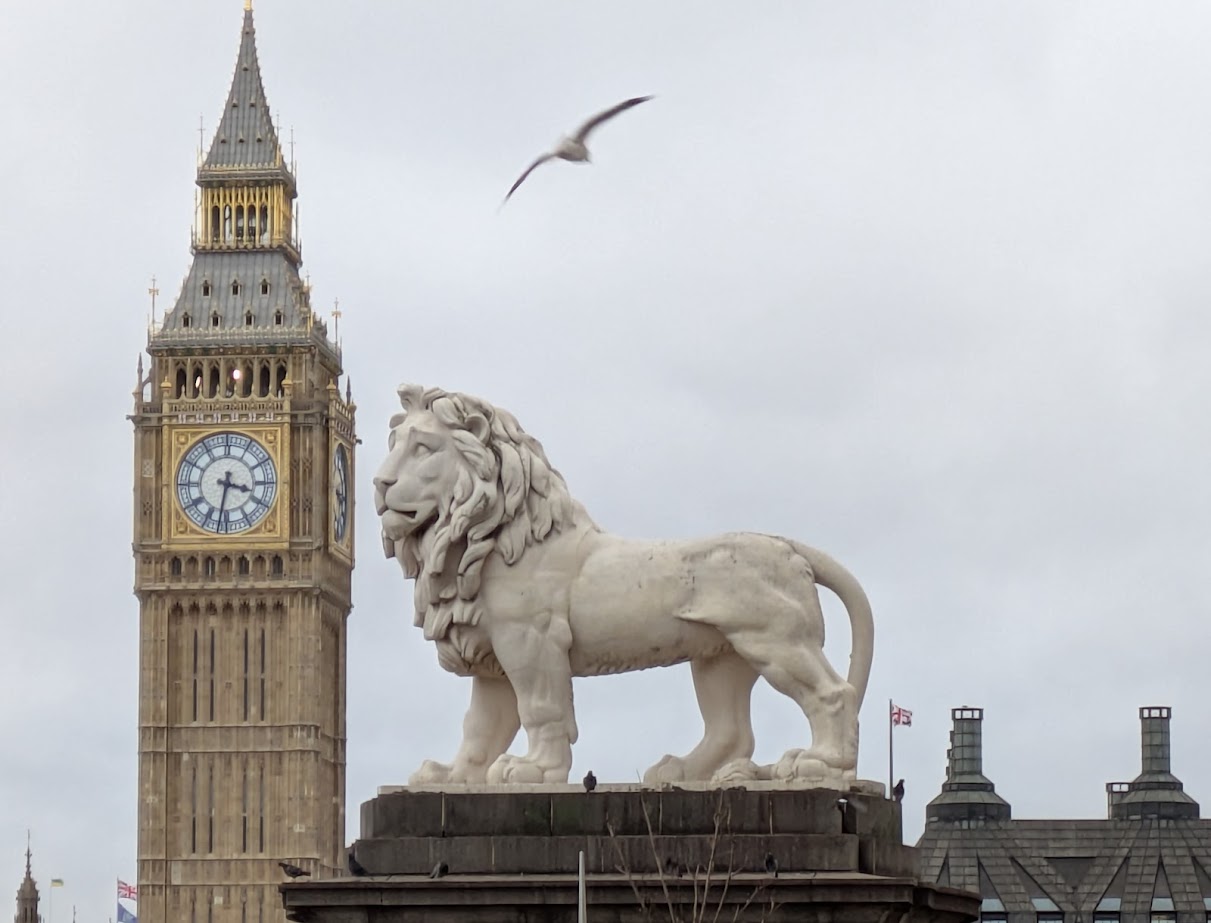
Obsessed With London

Two years ago, in November, my husband and I visited London to celebrate our 50th wedding anniversary. We’d heard about London’s West End and booked theatre reservations for five of our six days. However, by midweek, we realized we were skimming the surface; there was more to London than theatre. Samuel Johnson had observed something similar some two centuries before our visit: “When a man is tired of London, he is tired of life.” Amen to that. So, we returned this year for two weeks.

Our previous location was in Notting Hill (Yes, it’s just like the movies), but it wasn’t near a central station. This year, we booked a flat in Kensington, closer to central London. Gloucester Station was a short walk, which meant we could reach most sites by tube or hoofing it in 30 minutes or less.

London is an extraordinary city. Its museums are the best I’ve encountered. They’re in century-old buildings that have been renovated and maintained. Their collections are superb, and courtesy of the British taxpayers, they’re free. It’s in the museums that one begins to understand obsessions. The collections of objects–paintings, sculptures, instruments, bugs, bones, ceramics, books, etc.–are beyond most people’s comprehension. But I get it. I have a predilection for photographing manhole covers, murals, ceramics, fabric art, and doorways. While my husband comments that, once again, I’m slowing our pace to snap a photo, I remind him that these items are stored in the cloud, not on walls, shelves, or drawers.

Over The Bridge

This trip, we visited the Science Museum and the Museum of Natural History. Twice. To say we were awestruck is an understatement. The intellectual contributions of individuals who were both curious and systematic created the powerhouse that was once England. We were similarly moved by the artists, but managed only one visit to each of the following: the British Museum, the Wallace Collection, the National Gallery, the Portrait Gallery, and the Victoria and Albert Museum. We came away with an appreciation of the arts (painting and ceramics) from the Medieval through to the Baroque periods. The conditions under which these pieces were created would not meet today’s work safety standards, yet the artists persevered, and we’re their beneficiaries.

Two years ago, we didn’t have time to travel beyond London. This year, we visited Bath (home to the Roman Baths and the site of several Bridgerton sets) and Oxford for walking tours of the towns. One of the remarkable features of the Oxford town tour was standing at a spot where we could take in a 360-degree view of buildings constructed in the 13th, 14th, 15th, 16th, and 17th centuries. We marvelled. The craftsmanship celebrated the confluence of architecture, mathematics and engineering. Each of these trips, which took a full day with connections, meant budgeting time elsewhere. Consequently, we bailed on Windsor Castle and Hampton Court.

My bias, of course, for London is the theatre. We managed to catch five performances: The Producers (madcap and fun), The Importance of Being Earnest (campy, fun, featuring Stephen Fry), The Assembled Parties (thoughtful), The Spy Who Came in from the Cold (riveting), and Stereophonic (immersive). If you plan to see theatre in London, book your tickets well in advance.  I started booking about a week before we left, and the seat selections were limited.

And finally, we attended a Vivaldi candlelight concert at St. Martin in the Fields. It was an extraordinary fusion of music and architecture. Vivaldi wrote The Four Seasons in 1723; the architect, James Gibbs, began building the church in 1720 and completed it in 1725. That evening we were mesmerized as music soared and swirled throughout this elegant parish church. Some three centuries later, we were reaping the efforts of these visionary artists.

We are grateful for this trip. My parents didn’t make fifty years of marriage; Dad died twenty-four days short of their fiftieth anniversary. While Kenn and I have had the pleasure of celebrating fifty-two years, two months, and one week, I wouldn’t ask for another fifty. A few more, combined with good health, would have my cup spill over with blessings.

As for obsessions, my photos are scattered across my Google timeline and crowd my gigabyte limit. It’s time to behave like a Victorian collector and begin grouping them according to type and place. And then, I’ll post them on Instagram. Who knows what will happen? Perhaps someone, somewhere, in charge of replacing manhole covers will take the opportunity to create sidewalk art. I would love that.

Bonnie Lendrum is the author of Autumn’s Grace, the story of how one family manages the experience of palliative care with hope and humor despite sibling conflicts, generational pulls and career demands. Autumn’s Grace is a powerful commentary on the need for well-organized and well-funded palliative care in private homes and in residential hospices. It’s a gift to people who would like to be prepared as they help fulfill the final wishes of a family member or friend.

The Mind Mappers

The Mind Mappers by Eric Andrew-Gee is a gripping read of history, obsession, friendship, and betrayal. The history is ours – Canadian. The obsession is the quest by neurosurgeons William Cone and Wilder Penfield to map areas of the brain and their links to function. The friendship and, ultimately, the betrayal are between the same men.

Wilder Penfield (1981-1976) is a name known to many Canadians. The Heritage Minute (1991) by Historica Canada would have been his introduction to young people who had no prior knowledge of his pioneering brain surgery. Montrealers considered him an adopted son, and clinicians worldwide marvelled at his accomplishments. Where Penfield was an explorer and researcher who enjoyed the acclaim, William Cone (1897-1959) was his colleague “in harness” who did multiple surgeries for every one of Penfield’s. He was renowned for his surgical precision, his caregiving compassion and and his restlessness when not in scrubs. William Cone is the name that is not well known, yet he was beloved by his residents, the nurses, patients and their families. Together, William Cone and Wilder Penfield founded the Montreal Neurological Institute, a magnet hospital, which attracted neurosurgeons around the world.

The Mind-Mappers is a well-crafted, engaging recount of history. It’s a story about the passion for exploration and excellence that made “The Neuro” an international landmark.

Bonnie Lendrum is the author of Autumn’s Grace, the story of how one family manages the experience of palliative care with hope and humour despite sibling conflicts, generational pulls and career demands. Autumn’s Grace is a powerful commentary on the need for well-organized and well-funded palliative care in private homes and in residential hospices. It’s a gift to people who would like to be prepared as they help fulfill the final wishes of a family member or friend. 

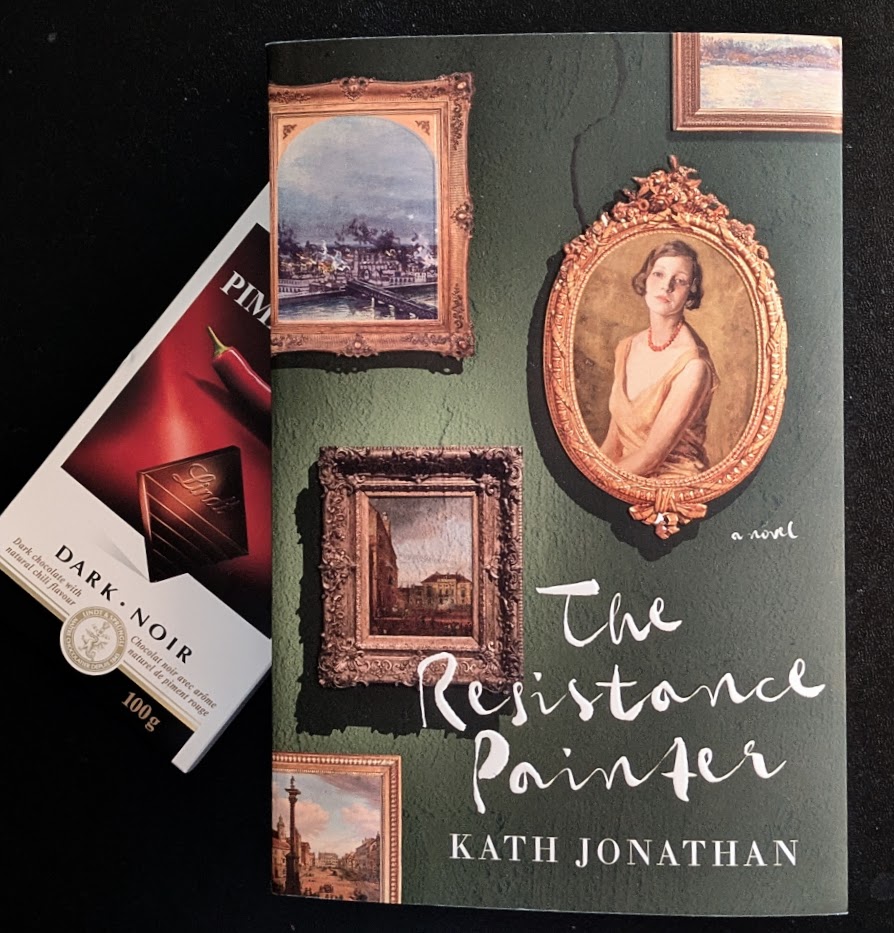
The Resistance Painter – An Irresistible Read

Books and theatre are my chocolate. They spike the pleasure receptors in my brain. While theatre offers a two-hour burst of engagement and immersion, books render a more leisurely gratification. Traditionally, I read at bedtime, a few chapters each night, much like nibbling at a square of dark chocolate infused with hot pepper. But occasionally a book comes along that MUST be consumed immediately. Space MUST be made in the day to read, and for me, that experience is rare. The Resistance Painter is one of these books.

Kath Jonathan’s The Resistance Painter is, at its heart, a mystery. The setting intertwines two timelines and two countries, WWII in Warsaw and the current day in Toronto. It’s told with two POVS, both young women: an artist, Irena, who aspires to paint at a Parisian art school, and her granddaughter, Jo, who creates commissioned sculptures for grave sites. The date-stamping of each chapter has two effects. The reader can follow the trajectory of Irena’s war experience as she becomes a resistance leader in the Home Army, and can trace Jo’s efforts to understand her grandmother’s life and the art she created.  

While the story begins with an air raid in the middle of the night, the mystery underlying the tale begins in chapter three when Jo interviews an elderly Polish man who wishes to commission a sculpture. Stephan too survived the war, and in his interviews with Jo he describes himself as having been a resistance fighter in Warsaw, guiding people through the sewers to escape the Nazis. Irena had conducted similar harrowing missions in Warsaw, which plants a question in Jo’s mind: Could Stephan and Irena have known each other? The possibility of an association nags at Jo as she cares for Irena, who has become frail, is recovering from a broken arm and whose cognitive function is not always en pointe. And this is where I will stop. I’ll not recount the plot further than this for fear of dropping a spoiler.  

The author has drawn her characters fully. We know their aspirations, memories, quirks, families, friendships, lovers and horrors. The settings are vivid: wartime Warsaw with its neighbourhoods and sewers, the Ravensbrück concentration camp, Irena’s home studio, and the Mount Pleasant Cemetery. Kath Jonathan has done what few current writers of historical fiction accomplish. She has written literary historical fiction anchored in fact. There is no fluff in her writing.

Until The Resistance Painter, there has been only a handful of books that have made me want to reread them within a few weeks of the first reading. These favourites are noted in previous blog posts. I’ll be connecting with THE RESISTANCE PAINTER in a more leisurely manner next time and savour every detail.

Now, dear reader, which books do you return to? And what draws you back? In this age of prolific book production, I’m always curious to know our tethers.

Milestones

I’ve been thinking about milestones of late. They’re important because they mark progress toward a goal…a physical trail, a work plan or a life journey. I’ve been marking several on the environmental front, but missing just as many on my creative work.

The past seventeen months have been a period of hitting milestones on an environmental preservation project. It has been an intense period with a slow ramp-up that started in 2021 when a few of us figuratively joined hands and created the not-for-profit Greenough and North Bruce Wilderness Alliance. We aspired to become a land trust with the goal of conserving and restoring the natural wild environment of lands along the western shore of the Northern Bruce Peninsula for everyone and forever. This shore is not as well known as the eastern or the Georgian Bay side where hiking trails run from shoreline to cliffs, aqua-coloured water pools at the base of those cliffs, and flowerpot rock formations stand proud at the top of the peninsula.

I’ve loved the Saugeen-Bruce since I was a child. My mother’s family came from a farm near Teeswater, and I have memories of touching the poppies that grew in my grandmother’s garden marvelling at their fragile petals and hairy stems, trekking through the fields to my cousins’ farm, and spending several snowy Christmases at my aunt’s farm. But I hadn’t appreciated that there was a Great Lake nearby until we purchased waterfront land in 2006. The feeling I get when we arrive and step out of the car is that I’m home. There’s birdsong, the cool scent of cedar, and the sound of the waves. It’s as close to heaven as one can get. And that’s why I signed on to the dream of a land trust.

The project to create the trust began with a series of conversations among friends. Making it real has taken hard work and creativity. I’ve stuck with it because my fellow board members are committed and generous with those essential ingredients time and talent. And this project has taken scads of both. The paperwork to achieve such a dream is formidable.

In retrospect, achieving the early credentialing milestones of becoming a not-for-profit and then a registered charity through the Canada Revenue Agency was relatively easy. However, at the time, as we created bylaws for the land trust, none of us would have said so. The work that followed, developing relationships with the vendors, foundations, conservancies, and donors and writing grant applications, was formidable. It became the equivalent of 1.5 jobs, unpaid, but with the profound satisfaction of hitting milestones.

We’re a team of Type A individuals, so we approach any stage with a mix of caution, courage and discipline.  A property that we believed was worthy of protection was nearby. It was 20 acres with 1122 feet of shoreline that hosted three Alvars, a wetland with rushes (aka Fen), and a Forest with old growth cedar trees. The property had recently come off the market and was lying dormant. Our worst fear was that a someone would purchase it, put in docks, run jet boats through the Fen, chop down the cedars and trample globally rare plants. We arranged for a certified appraisal and approached the vendors with a price we could afford…if we could raise the funds. The vendors believed in our conservation mission, and we signed an Agreement for Purchase and Sale. That milestone was when I started to hyperventilate. How on earth would we raise the funds? Although we had a generous pledge in place, raising the balance would require considerable effort and goodwill.

Fundraising began in earnest. As the writer in the group, I learned how to write grant applications, with the nerve-wracking expectation that each one would be reviewed by individuals who knew environmental science better than I did. I also learned that grants from trusts like ours are not submitted by novices; they are written by staff members with serious street credibility as ecologists and biologists. We submitted four and were successful on two. Each submission was another milestone. Each acceptance fueled us. Each rejection gave us pause. There was still an enormous gap between the purchase price and the funds we had raised.

We reviewed websites for foundations and trusts committed to conservation and found that we had either missed deadlines or they had focused their funds on environmental processes like remediation rather than acquisitions. Who could argue with the latter? Every bit of effort to protect the climate counts. While they couldn’t help this time, we would be ready to ask for the next acquisition.

To say we were elated when one trust agreed to meet with us is an understatement. We prepared notes and a PowerPoint presentation. The principals were kind and asked superb questions, but they had reservations. The Wilderness Alliance had no track record. However, they were willing to meet with us again once we heard back from the granting organizations.

We also approached conservancies that were protecting land on the Saugeen-Bruce. Our acquisition was too small, the timing was off, or the capacity was not present. We understood, and furthermore, we still didn’t have that important ingredient, street credibility. We were still an emerging land trust. However, one conservancy expressed an interest, visited the site with a fellow director, expressed enthusiasm and signed on. Once again, we were elated.

Despite our novice status, we have been successful. We have secured the property which sits within a Provincially Designated Area of Natural Scientific Interest. Furthermore, we’ve protected it from development. The result of this effort is that we have met extraordinary individuals who believed in our efforts and were prepared to support our dream by way of advice, funds or both. It’s a team milestone we’ll celebrate with members and donors at the end of May.

Our work has just begun. Our goal is to conserve and restore the natural wild environment of lands along the western shore of the Northern Bruce Peninsula for everyone and forever. We call it a Pathway to Preservation. We know now that the work is intense and that obstacles will be thrust in our path. Our hope is that we will encounter other like-minded individuals who will join us in our mission. Please consider joining us at Greenough and North Bruce Wilderness Alliance.

When It’s All Up To You, You’re All Grown-Up*

Remember being sixteen, getting your driver’s licence and thinking you were all grown-up?

Maybe that feeling lasted until you lost your virginity. In fifteen minutes, you had been introduced to the mysteries of adulthood but were left wondering, “Is that all there is? Could there be more to being grown-up?”

And yes, there was.

Like the time you received your first paycheque and realized you were contributing to the Canada Pension Plan. You were barely out of your teens. Planning for your old age sounded very grown-up.

Then, when you cast your first ballot at the age of twenty-one, you realized that you were taking part in the affairs of the country. This had to be grown-up.

But no. There was still more.

After a time, you realized that ‘grown-up’ was an illusion. Yet, you continued to have these milestone moments of awareness when you married, bought your first house, and then again when you had your first child.

However, somewhere between that first child and that same child’s graduation from middle school, a parent became ill, and, like many before and after you, there was a meeting with the oncologist that went something like this: “We’re starting to lose control. Transfusions will not fix the white blood cells, and the risk of infection increases as they drop. The disease is becoming an acute leukemia, and given your age, there is not a lot we can do. In the meantime, we can get the red blood cells back up, and that will make you feel better. Your breathing will be easier. But we may have to move to twice-weekly transfusions. At this stage, we’re trying to hold it together as best we can. Why don’t you take the time before your next visit and decide how aggressively you want to treat this? We’ll gather more data and give you the space to think about your wishes.”

And that was when it hit you. “This is what it means to be grown-up.”

And if, like me, you regressed while your parent was ill, wanting to be the child who did not have to deal with adult situations, it was a wake-up call. Grown-ups drive, vote, give birth, pay taxes, buy a house, pay down the mortgage, raise children, and grown-ups help their parents exit this world.

No one told me as I grew up that I would be helping a parent through an illness, that I would be sitting with that parent as they drew their last breath. Or that I would be comforting the surviving parent. No one told me or showed me, so I wasn’t prepared. And I was a registered nurse. If I wasn’t ready, then who was?

It’s a familiar situation. A parent becomes ill; the prognosis is grim. And squeezed into those free moments amongst the competing demands of children, careers, marriage, and caregiving, they and we need to learn more than we ever wanted to know about dying.

But what if our society normalized dying and death just as we have done pregnancy and childbirth?

If we accepted dying and death to be part of the life cycle, palliative care would be introduced to high school health education classes.  Lessons about learning how to be present to and caring for someone who is gravely ill would co-exist with other content, like sex education. The minimal value of being present during the end stages of an illness is that it provides our children with a practice opportunity — long before they assume the mantle of family elder. At best, the experience of being present with several generations creates an opportunity for a family discussion about remembering, grieving, and preparing for end-of-life—while living each day to the fullest.

However, inclusion in high school curricula requires societal pre-cursors such as:

  • Advance Directives for End-of-Life Care are discussed, written down, filed and communicated with the family physician. (About 52% of Canadians have had discussions with family or friends; 20% have a written advance care plan; 10% have had discussions with their health care practitioners. 1)  
  • Palliative care content is included in the curriculum of all medical and nursing schools. (There is still work to be done.)
  • Palliative care services are well-funded and integrated into the health care system. (We’re not there yet.)

If we hope to fare better than our parents may have in their last weeks, days and moments, there is much work to be done, and it’s up to us because we are now the grown-ups.

A course sponsored by the Canadian Hospice Palliative Care Association, Last Aid®, gives me hope that Canadians will begin to normalize dying and death just as we have pregnancy and childbirth. Last Aid® is like First Aid for end-of-life. It’s the kind of course I’ve envisioned since Autumn’s Grace was published in 2013. This month, I’ll learn more about Last Aid® as I’m introduced to the role of facilitator. What entices me about the program is that it’s preparatory. Much like pre-natal courses prepare novices to become guardians of a new life, Last Aid will help participants learn to care for someone whose life force is ebbing.

Just as the life cycle concept struck a chord with me early in my practice, Last Aid® resonates now: Pre-natal care and end-of-life care create a virtuous circle, and I’m honoured to be part of the process.

*This blog post was first published on October 22, 2014. This post is an updated, edited version.

 1.What do Canadians think of advanced care planning? Findings from an online opinion poll | BMJ Supportive & Palliative Care

  Advance_care_planning_we_need_to_do_it_more_but_it.pdf

Bonnie Lendrum is the author of Autumn’s Grace, the story of how one family manages the experience of palliative care with hope and humour despite sibling conflicts, generational pulls and career demands. Autumn’s Grace is a powerful commentary on the need for well-organized and well-funded palliative care in private homes and in residential hospices. It’s a gift to people who would like to be prepared as they help fulfill the final wishes of a family member or friend. 

©2013-2025 Bonnie L. Lendrum | all rights reserved | 

Boy Falls From The Sky — An Uplifting Performance

Readers of this blog will know that I have a love-hate relationship with musicals. It’s not that I dislike musicals in general; it’s the musical with unhummable music that I dislike. So it was with some trepidation that I viewed the stage at Theatre Aquarius for Boy Falls From the Sky. It was set with drums, a piano, a bass, guitars and electronic paraphernalia. But from the moment Jake Epstein strapped on his guitar, I was engrossed.

Jake has an engaging stage presence, a strong voice, and an easy physicality. The through line of Boy is autobiography—Jake’s journey from singing show tunes in the back seat of the family car to being cast in Broadway productions. It’s a path pebbled with the heartbreak of rejection, the loneliness of touring, and the joy of connecting with audiences. The evening was pure entertainment, and to quote Jake, “The show is ultimately a joyful love letter to the theatre.” I would agree. And it left me with a song to hum: Razzle Dazzle from Chicago.

Jake is ably supported by Daniel Abrahamson on keyboard, Abby David on bass and Justin Han on drums. Boy Falls From The Sky was written by Jake Epstein; Robert McQueen is the developer and director.

Boy Falls From The Sky has a short run at Theatre Aquarius, Hamilton,  from October 25-November 4, 2023.

Bonnie Lendrum is the author of Autumn’s Grace, the story of how one family manages the experience of palliative care with hope and humor despite sibling conflicts, generational pulls and career demands. Autumn’s Grace is a powerful commentary on the need for well-organized and well-funded palliative care in private homes and in residential hospices. It’s a gift to people who would like to be prepared as they help fulfill the final wishes of a family member or friend. 

Temagami Time = Reading Time

Lake Temagami is the one place on earth where I come close to polishing off a book a day. All the gadgets, screens, beeps, ringtones, and jobs that consume my waking hours back home are absent. The island has no electricity, no Wi-Fi, and no running water. That’s right.

If we want water, we pump it. If we want it hot, we put it in a kettle on the propane stove.

If we want light when the sun goes down, we flick a match and hold it under a propane-fueled lamp fixture.

Yes, I do know we could have electricity if we had solar panels on the roof. But that would mean having battery storage, and I now know of two fires from such arrangements. Or we could turn on a gas-powered generator, but we don’t. The noise would drown out the lapping of waves, the call of the loons, the chirps of the chickadees, the rustling of a Ruffled Grouse, and the whirr of the hummingbirds’ wings.

So, each year, it’s with great care that I plan my reading list for our Temagami vacation. I had two books by Julian Barnes, and some recent prize winners in the pile; however, all were set aside after I heard Ann Patchett speak about Louise Erdrich on a podcast: The Shit No One Tells You About Writing. When an author I admire is a fan of an author whose work I haven’t read, that’s a signal to track down the books. I was in luck. The Hamilton Public Library had a good collection; I signed out six.

I could write a review of each book, but I won’t. It would take time away from reading the two I didn’t crack open on holiday (The Night Watchman, 2020 and The Sentence, 2021). But I will say that I was riveted by the storytelling, the depth of each scene, the characterizations, the settings, the history, the spirituality, the magical realism, and the science. Each book was profoundly different from the one before. I only skimmed the surface of Erdrich’s work and read the books chronologically: The Blue Jay’s Dance, 1995; Shadow Tag, 2010; La Rose, 2016; Future Home of the Living God, 2017. The week felt like a Master Class. Now, I need my own copies. I’ll read each one again and take notes, probably in the margins.

I’m blessed. It was a week spent with family who are as happy as I am to have their noses in books. We appreciate that the span of unstructured and unplugged time at Temagami is a scarce and precious commodity. We are the richer for it.

Now tell me, dear reader, what did you read this summer, and where did you read?

Bonnie Lendrum is the author of Autumn’s Grace, the story of how one family manages the experience of palliative care with hope and humour despite sibling conflicts, generational pulls and career demands. Autumn’s Grace is a powerful commentary on the need for well-organized and well-funded palliative care in private homes and in residential hospices. It’s a gift to people who would like to be prepared as they help fulfill the final wishes of a family member or friend. 

Foreplay and Summer Theatre

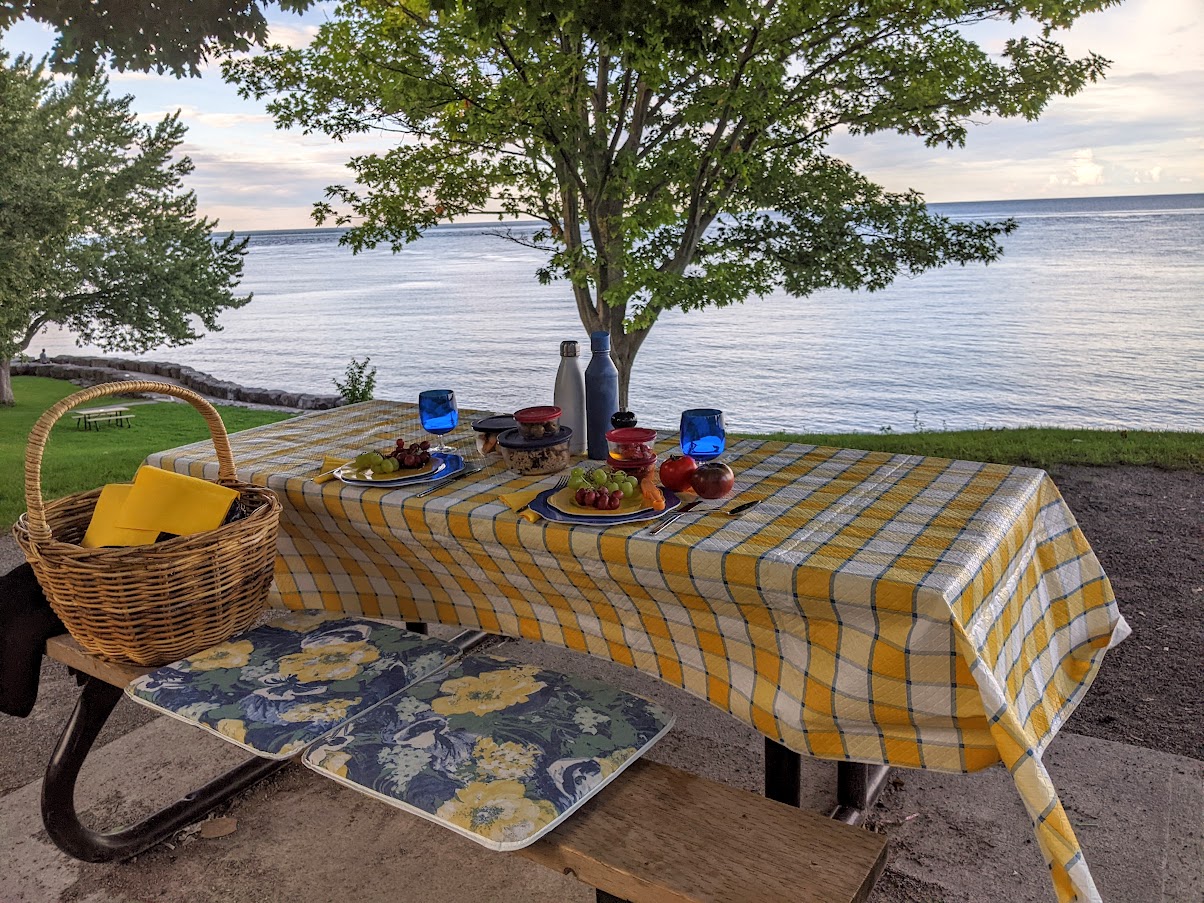
One of my favourite summer activities is theatre, not just the performance, but the stretch of time before the show. Some years ago, we decided to fill that space with picnics rather than prix fixe dinners. We set a picnic table with a checked tablecloth and coordinating plates and then feast on hors d’oeuvres and large salads. There’s wine, of course, discreetly poured into glassware.

In Stratford we nosh by the Avon River, watching the swans drift, and the scullers pull. In Niagara-on-the-Lake, the scene is different: The Niagara River empties into Lake Ontario, so our view is that of sailboats tacking their courses in the distance and kayakers paddling closer to shore. During COVID, I missed our pre-theatre picnics as much as I missed theatre. Picnics set the mood for a romantic date with my favourite guy. Al fresco dinners feel spacious, languid, and intimate; they were and still are the foreplay to the main event.

And let me say that this summer’s theatrical offerings are luscious. The ensembles and the artistic companies at both Stratford and Shaw are talent powerhouses. Each production brings together the skills and creativity of set, costume and lighting designers to support the performers and their telling of stories.

Our first play of the season was Cyrano de Bergerac, a poignant and compassionate portrayal of unrequited love; Tom Rooney played the lovelorn, self-effacing Cyrano to Deborah Hay’s self-absorbed, ingénue Roxanne. I’ve seen Cyrano before, but this performance by Rooney made it the best ever. The set changes were remarkable: a theatre, courtyard, army camp, and convent. Sadly for you, dear reader, we saw the last performance on May 8th, but there are many more superb plays to see this season.

Damn Yankees was one of them, but it was not as we expected. Because some cast members had been injured or fallen ill, we were to see a ‘concert performance,’ a phrase I’d not heard before. What it means is no set and minimal costume changes. As we took our seats, my less than generous thoughts went something like this: Hmmm. We drove for 90 minutes to see the actors sitting on the stage? My expectations were low; the cast roles for the evening had been vigorously shaken and stirred (see inset). But it’s in situations like this where ensembles excel. Yes, the actors were arrayed in a semi-circle of chairs at the outset. But, they did sing, act, and did so with vigour. It wasn’t evident that several actors who had been plucked out of their assigned roles and plunged into their understudy roles, might have experienced tachycardia for the duration. A measure of the performance was that the audience gave the cast and crew a standing ovation. I, too, was on my feet, and that was unusual; I’m not a fan of musicals or baseball.

Everybody is the penultimate expression of ensemble excellence. If you were to attend every production of it this season, it’s unlikely you would see the exact same play. That’s because the role of Somebody is fourteen different roles which are played by six actors on a lottery basis each night. That’s right. Early in the show, a raffle drum is produced, and the six actors choose their roles for the evening. The play is about Death, its capriciousness, and how it ultimately comes for the good and the bad, ready or not. It’s funny and serious and absolutely life-affirming.

Chitra – Shaw Festival Theatre is a Bengalese play that addresses a tale as old as time: How to marry the ecstasy of sexual desire with a serene, mature spiritual love? When this theme is blended with women’s empowerment in a repressive society, it becomes more layered. Chitra has an astonishingly simple yet effective set. I want to say that the actors danced, but they didn’t; they moved poetically across the stage and up and down the set. Chitra is a lunchtime performance. If you book it, you will have time to play nine holes at a local golf course and still make time for dinner and an evening performance. We did precisely that and purchased a new Tilley hat at Beau Chapeau. It was the perfect summer’s day.

That evening’s performance was Gaslight. I first heard the term gaslighting as I listened to an NPR production decades ago on a long car trip. The story was so vivid, and the theme so sinister that I had the sense of seeing it as I drove. This production at Shaw does a similar job of creating menace and foreboding. It reminded me of another play I saw years ago at Theatre Aquarius, Wait Until Midnight. The evening I saw that performance was one where I returned to our home in the country…by myself. Kenn was on a business trip; I slept with a knife under my pillow. Without giving anything away, Gaslight works anxieties equally well but does let one have a good night’s sleep.

Summer Books and Where We Read Them

Where in the world does one find the time and space to read a book from cover to cover in under forty-eight hours? For me, that place is Lake Temagami, specifically Sharp Rock Inlet, an hour’s boat ride from anything that resembles civilization. The urgent distractions are modest: Have we boiled enough drinking water to get through the day? Do we have enough kindling to light the morning’s fire? Should we tie up the canoes for the night or flip them on shore?

Cabin- Lake Temagami

But getting there is a challenge. The shopping and organization to prepare for a week (or two) without access to stores would make the heart of any Six Sigma practitioner skip a beat. If it’s not on the water taxi when we leave the dock at the end of the mining road, we do without. (Forget about borrowing from a neighbour; the closest one is twenty-minutes away by canoe.) The possibility of deprivation focuses the mind.

Once the menu has been planned and the grocery list constructed, the next hurdle is selecting the books. Space is always at a premium in both the car and the water taxi; I need enough books, but not too many. The message in my mind is “Choose well, or else!”

Pen and Water Colour by Gary Allsopp, 2022

Once I’ve arrived and settled in, the reading takes place in mid-century modern chairs. (See image). When they were hauled to Temagami by my parents, it was because they were no longer fashionable. They were just old and saggy. Twenty years ago, my sister, nieces, and I rectified the dippy seats with cushions we fashioned from foam and homemade slipcovers. If you hold your head just right and squint, you might think Martha Stewart dropped by to tart up a fishing cabin, just enough to make the women happy and not so much to make the men cranky. When the windows are flung open, and the breezes blow straight through the cabin, you would be hard-pressed to find a more comfortable, cooler spot to read. Factor in the scent of pine resin and the sound of waves lapping at the rocky shoreline, and it’s sublime. Time and space expand.

But back to books.

This year I selected three. I could not have been more pleased. The first to be consumed was The Bonfire of the Vanities by Tom Wolfe (1987). It had been on my bookshelf for years, but not for thirty-five years! My copy has come from a second-hand bookstore (Pickwick Books in Waterdown? Books and Company in Picton?). I discovered this when I realized the loose endpaper had been cut away. (If it was a gift, the previous owner and its giver will remain a mystery.) Bonfire was an incredible dive into the heart of New York. I couldn’t help but wonder if Wolfe had his finger in the air testing the winds that would blow two decades later. He captured populism, racism, capitalism, entitlement, and disadvantage, skewering each in the process. I was enthralled. The characters and the plot were strong. And yes, just like my copy, there was an element of mystery.

The next book was The Town That Forgot How to Breathe by Kenneth Harvey (2003). The version I have is autographed, and it was given to me in Newfoundland in 2005 when we attended a Screech-In. But who gave it to me? The book has been on my shelf for seventeen years, waiting for the right time to be read. This year was it. I was immediately drawn into the mesmerizing world of Bareneed, on the northwest shore of Conception Bay, Newfoundland. Sure, there are physical similarities between Temagami and Bareneed; we pump water, light the hearth, read by gas light, and always have an eye to the wind and waves, but the similarities end there. Harvey weaves a tight tale of Newfoundland lore that he spins into the current time, and he does it through a strong narrative with more than a dash of magical realism. I marvelled at his ability to keep a complex plot clean and clear. I’ll be searching out his other books over the next while.

The third book was one I had opened before we departed for the wilderness, This is Your Mind On Plants, and I had finished the Opium section. As we waited for the Loon Lodge water taxi to collect us from the island, I started Caffeine. Next up is Mescaline. Michael Pollan never fails to engage me. However, unlike The Omnivore’s Dilemma, which led me to small food producers, I suspect the only behaviour change might be an attempt to grow poppies for their colour, not for their sap.

That’s almost it for my summer reading. The next book up is Amor Towles A Gentleman in Moscow. I’m re-reading it for a book club and enjoying it again. But a chapter a night is not the same experience as a novel a day. Another book by Towles that I’d recommend is Rules of Civility. It, too, is a pleasure.

And now, dear reader, I want to know what was on your summer reading list. And where in the world is your favourite spot to read a novel in a day or two? Do tell!

Bonnie Lendrum is the author of Autumn’s Grace, the story of how one family manages the experience of palliative care with hope and humour despite sibling conflicts, generational pulls and career demands. Autumn’s Grace is a powerful commentary on the need for well-organized and well-funded palliative care in private homes and in residential hospices. It’s a gift to people who would like to be prepared as they help fulfill the final wishes of a family member or friend.